
I think the class was great. Honestly, I had very little knowledge and experience with sociolinguistics until I came to this class. I enjoyed many of the articles we read, but sometimes it was just too much. I think the two readings a week were killers. Sometimes it would be too much to unpack and I wouldn’t understand it all until we had class together to talk about the articles. However, most of them were very interesting once I grasped the concepts in the material. The literature portion was the most enjoyable to me because as a person who works on short stories, because I got to see how language can impact dialogue greatly. I won’t lie, I hate doing the research paper. I hate doing it and I hate talking about it. I hate that it’s been mentioned so much throughout the semester. Just knowing when it was due all the time and what it entailed, was stressful as hell. It’s been fun to do at the same time though and it’s been very interesting to explore social media and Jamaican Creole. Overall, I loved the material we went over and the people in my class because they really pushed the discussions forward whilst helping me understand the material. They also motivated me to come up with good questions/comments for the articles we read. Thank you for an interesting class, and for all the work you’ve assigned to us as it all has made me a better writer in the grand scheme of things.
Author: Marc Torres
Blog #6
For my project on Jamaican Creole orthography and attitudes towards the language in social media, I will be applying some concepts of Historic low prestige and seeds of change: Attitudes toward Jamaican Creole by Alicia Beckford Wassink. Some of the concepts I will be using are mainly focused on the attitude toward JC, since I am having a little trouble finding articles to shape my argument for the standardization of its orthography through memes.
The article goes in depth with discussing the attitudes toward the Jamaican Creole language. It first discusses how Jamaican Creole was seen as a low prestige language, and then how it has actually gained prestige. It also talks about how native speakers of language feel towards the language, and who they think should be able to use the language.
The article states:
Recent discussion among both Jamaican scholars and laypeople suggests that Jamaicans’ attitudes toward Jamaican Creole (hereafter JC) are changing.’ This change, some suggest, has accompanied the increased popularity of Dancehall culture and nationalistic ‘consciousness raising’ efforts (Christie 1995, Shields- Brodber 1997).2,
(57).
Here, the article suggests that Jamaica Creole has risen in popularity due to Dancehall culture and other efforts of mixed media. The article later goes on to say: “ Such a shift in attitudes toward “things Jamaican” marks a significant conceptual reorientation, in light of the high esteem that historically has been given to British culture, and more recently on American culture,” (57). These types of shifts in the popularity and prestige in the language allow for many people all over the internet to police the language, even when they may not be Jamaican Creole speakers themselves (since it has quickly become a popular language throughout the world).
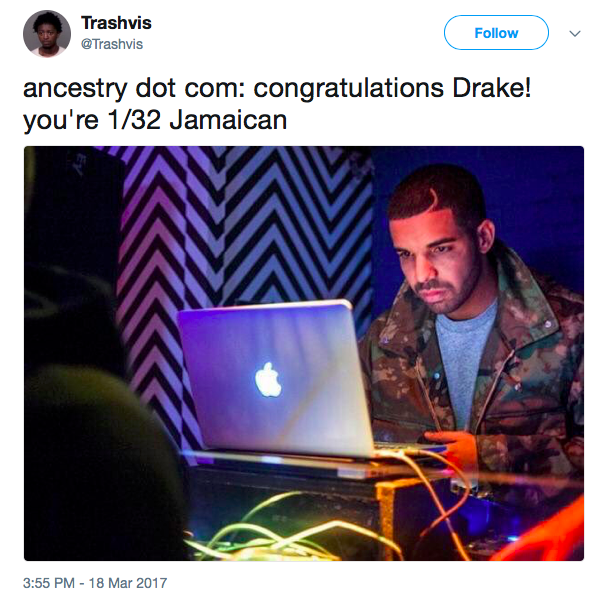
For the meme in my featured image it shows a picture of the Canadian Rapper Drake, checking a laptop. The caption for the meme is “ancestry dot com: congratulations Drake! you’re 1/32 Jamaican.” While it is unknown whether or not the creator of the meme is actually a native Jamaican Creole speaker, the meme creator does police who can and cannot use the language with the meme. It calls into question the authenticity of Drake’s continued use of Jamaican Creole in his music. The creator of the meme feels that since Drake is not of Jamaican descent, he shouldn’t be allowed to use the language. This is why he makes Drake have a tiny bit of Jamaican in him with the meme going hand and hand with the website ancestry.com. It also makes fun of the fact that people do ancestry tests, and end up with small percentages of heritage they never thought they would be apart of. So, it makes fun of the rapper and shuns him for using a language that is part of a culture/heritage he is not apart of.
Many of the comments and reactions to the post on twitter also police Drake’s use of JC. There are comments such as this one: 
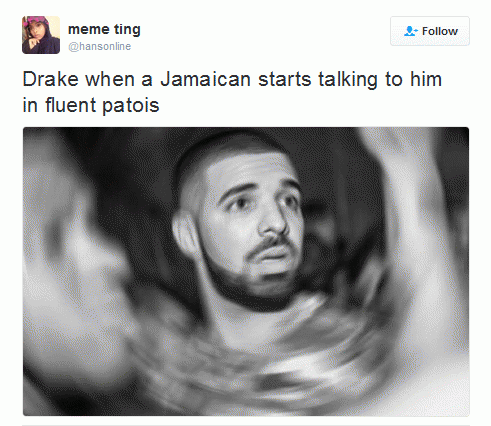
Here, one of the commenters, Miguelmeza23, makes fun of Drake with their own meme-like comment. The comment has a caption that says “Drake be like,” and shows a picture of a man wearing a Rastacap saying “If I wasn’t Jamaican, then why would I wear this hat?” It not only makes fun of the rapper for using JC, but also shows how he is in a way, appropriating the culture for financial gain and prominence among the Jamaican community. However, even with all the jokes it can be argued that the rapper Drake is in fact, helping the language gain prestige. He mingles in circles of money and power, and has become an international and national icon. The fact that he uses Jamaican Creole in his music and opens up a dialogue about the language, shows how he forces people all throughout the internet (and world) to think about the language.
Blog #5
Jamaican Creole is a language that is used across the world. It has garnered much attention in recent years due to the increased use of it by celebrities and music artists alike. Today, social media has allowed people who use the language such as native speakers, to voice their opinions on how the language is used by said celebrities and musicians. However, social media has also opened a door to the language and has allowed it to be seen by people who otherwise might not have been aware the language even existed. Things like youtube videos, and memes have been able to work towards making a standard orthography of the language through the informal use of social media. However, while these things have helped the language gain attention and have given the language a standardized orthography, social media also polices who can and cannot use the language. My project will focus on the attitudes towards Jamaican Creole in social media, and how youtube videos and memes have helped with coming up with a standard orthography for it whilst also showing how the language is policed, by deciding who can and cannot use it. My paper takes on a cultural-studies/critical-theory approach as opposed to a sociolinguistic approach. I will use the Prater, Bohmann, and Deuber, Dagmar & Lars Hinrichs to frame my paper.
I will choose about 4 or 5 memes from these sites to explore how the orthography of the language is being standardized (I will briefly touch upon some of the attitudes towards the language in regard to the memes as well when I talk about the memes in my paper):
https://www.highsnobiety.com/2017/03/20/drake-more-life-best-memes/
https://www.pinterest.com/natalienotniceh/jamaican-memes/
https://www.pinterest.com/pin/282460207858785252/
These are some of the youtube videos I will be using to explore how the language is being policed. These videos and their comments, will help me make a point about how social media polices who can and cannot use the language and what happens when expectations of who should use the language are thwarted and what that means (why it’s important):
https://www.youtube.com/watch?v=OxUemfJTOyc (TEACHING A JAMAICAN ENGLISH)
https://www.youtube.com/watch?v=5eujvwpT-GE (@4YallENT – The Jamaican Maury)
https://www.youtube.com/watch?v=a3-GJB2htE4 (Why Drake uses a Jamaican accent)
https://www.youtube.com/watch?v=LEm2HoswmgA (Re: [F] IM REALLY JAMAICAN)
Research Questions
- Does everyone agree with how the Jamaican Creole language is portrayed through memes on social media? Why or why not?
- How do these youtube videos work to fight off negative stigmas of the language (if they do), if they don’t, why don’t they? Do they actually perpetuate stereotypes about the people who use the language instead?
- Who decides who gets to use this language? Why? What happens when expectations of people who are supposed to use the language are thwarted? What does this mean?
Creole Languages in Short Stories – Essay #2 (Final)
Marc Torres
Professor Garley
English 470
13 March 2018
Creole Languages in Short Stories
Both “Joebell and America,” by Earl Lovelace and “The Waiting Room,” by Zoila Ellis are stories that feature written representation of creole languages. Earl Lovelace’s story includes Trinidadian Creole while Zolia Ellis’ story includes Belizean Creole. The reason I chose these stories was because both stories show the complexities of Creole languages. They also both show the types of people who use Creole languages and they both do interesting things to show how languages are connected to social status. Therefore, both stories show how Creole languages are just as valid and rule governed as English, and that they should be represented and used as much as English; both authors also use their stories to reject the negative connotations associated with creole languages.
In “Joebell and America” by Earl Lovelace, there are many examples that show how the Trinidadian Creole language is a complex language with many rules and standards that it must follow, like with standard English. For example, in the story the narrator says: “He make up his mind to leave and go away,” (2). Lovelace is using repetition to show that within the system of Trinidadian Creole, repetition is used for emphasis of something. Here, Lovelace shows how Joe Bell has really made his decision to leave. The fact that the story is also narrated in Trinidadian Creole, shows that Lovelace wants to show how rich the language is. So, right from the beginning we are given a narrator who speaks close to the Mesolect, since it isn’t far from the basilect but is very far from the acrolect (or the language closest to the standard language, which is English). Sebba says that a copula is: “the verb to be, or its equivalent,” (1). In Trinidadian Creole, this verb “to be” is dropped a lot of the times since it is unnecessary to communicate what is meant in the language. For example, the narrator in the story says: “Joebell find that he seeing too much hell in Trinidad,” (2). Here, the sentence should be “Joebell finds that he is seeing too much hell in Trinidad,” however the “s” from finds is dropped and the copula is dropped as well. These two simple actions of dropping the “s” and the copula show how the language does not need the verb “to be,” because the language still gets the overall message across without overcomplicating the sentence. This makes it much easier to learn the language, and still help people who don’t understand the language, understand the overall message because it is a simpler sentence without the copula. This happens again in the story when the narrator says: “He don’t look at Joebell, but everybody know is Joebell he talking to,” (4). Here, the word “is” means something else. This is a case of pronoun dropping. So, “is” in that part of story does not mean “to be,” and instead becomes a representation of “it’s” or “it is.” So while the sentence should be “he doesn’t look at Joebell, but everybody knows it’s Joebell he is talking to,” the sentence cuts the copulas once again and changes the meaning of “is” to the contraction “it’s.” This all shows how complex the Trinidadian Creole language is because of its rules which exist to make the language simple and easy to learn. The narrator in the first part of the story is someone from the same region as Joe Bell and they share the same kind of speech (Trinidadian Creole), that is the mesolect. The author also shows how this type of Creole is spoken by people who don’t have much money by adding in small details about the types of people who gamble with Joe Bell in order to make extra money. For example, the narrator says: “ Was a Friday night. Waterworks get pay, County Council get pay. It had men from Forestry. It had fellars from the Housing Project. Money high high on the table. Joebell favourite card is Jack,” (4). The author shows with reduplication that there was much money and that this money came from a collective of different people who were in different kinds of professions. This shows that the area where they are all from is poor, and that they themselves are poor since they have to gamble to make extra money. The narrator’s voice also does not adhere to the standardized English writing system. Although the author does create a narrative voice that is true to the Trinidadian Creole language. The language the narrator uses contributes to the characterization of Joe Bell and others because it shows how Joe Bell and the people around Joe Bell communicate with one another. By using reduplication with phrases like “high high,” and dropping copulas at times to follow the rules of the Trinidadian Creole language system, the author shows the language in action and how simple but complex it really is. The author’s relationship with the non-standardized language of Trinidadian Creole, is a close one. The author shows that while it is not a completely standardized language, there are things that make it special and stand out. While there are no rules which are written or standardized, there are certain things that people who speak Trinidadian Creole do when communicating via the language. The author is an obvious fan of the language and used his platform of storytelling to show how the language is complex and fairly simple to use at the same time. With this story, the author justifies how using a Trinidadian Creole can be just as hard and as sophisticated as using a language as standardized English. The story also rejects negative connotations associated with the Trinidadian Creole language because the author makes the characters hardworking, smart, and humorous even though they are poor. The story helps authenticate the author’s heritage and connects him with readers from his homeland.
“The Waiting Room,” by Zolia Ellis is written mostly in standard english with some of the dialogue being written in Belizean Creole. For example, one of the characters says: “Dat is not the word for it,” (419). Here, “Dat” means “that,” but is spelled with a “D” to show pronunciation. The “D” in “Dat” makes “that” appear differently because it is spelled differently, however it means the same thing. The author does this to make sure that the pronunciation of “dat” comes through in the story. The author gives very lengthy and detailed descriptions of the characters in order to show their class. In the story reduplication is also used. In the story one of the character say: “pon sale cheap, cheap, cheap,” (420). Here, the author uses what Mark Sebba calls Reduplication. Sebba says Reduplication is: “repetition of a morpheme of syllable, normally to fulfill grammati-cal function,” (3). This is reduplication because the character says “cheap” three times, when they could just say “really cheap” or “extremely cheap.” The “cheap, cheap, cheap,” serves to replace “really” and adds emphasis at the same time. The author shows how nuanced and complex bielizian creole is. Just like Earl Lovelace, Zolia Ellis uses her story to reject the negative connotations associated with creole languages. She makes her characters intelligent, and humble. They’re good people. Sebba says: “The idea that the races of human beings can be, and should be, ‘pure’, has caused a great deal of turmoil and suffering in the twentieth century. Almost as obstinate and damaging an idea is the notion that languages can be,” (4). Ellis shows that even though her native tongue isn’t what people consider “pure,” that it is still a language that deserves to be treated like a “pure” language (much like Standard English). She rejects the negative connotations associated with the creole language by proving there are rules that need to be followed to speak it, and that the people who use it are good people who are intelligent. The story serves to show that the author who is a native speaker can navigate between the mesolect and acrolect. It lets her connect with readers around the world, and with those in her homeland.
Both authors do a great job of handling their creole languages and showing the complexities of them. They also do an amazing job of characterizing the people who use their languages. While they do these things, they also empower themselves as authors and the creole languages by showing that the people who use the languages aren’t bad people, just poor people (most of the time). Both stories make strong cases for why creoles should be used as much as standard english. The stories are both artistic and political.
Works Cited
Ellis, Zolia. “The Waiting Room.” The Oxford Book of Caribbean Short Stories. Edited by Stewart Brown and John Wickham, Oxford University Press, 1999.
Lovelace, Earl. “Earl Lovelace’s Joebell and America.” Caribbean Beat Magazine, 23 Feb. 2018, www.caribbean-beat.com/issue-10/earl-lovelaces-joebell-and-ameica#axzz59yqMyMLy.
Sebba, Mark. Contact Languages: Pidgins and Creoles. Palgrave Macmillan, 2005.
Blog Post #4
The main contribution I have made to our website is for the history section. I gave a very brief overview of the history of Jamaican Creole. I talked about where it came from and how it formed. I also briefly touched on the people who used it and some of its earliest uses; adding onto what Jermaine had added in his intro. It was surprisingly hard for me to find much information about the history but there were a few resources which helped me.
Link: https://jamaicancreole.commons.gc.cuny.edu/
Nicaraguan English Creole (Essay #1)
Marc Torres
Professor Garley
English 470
13 February 2018
Nicaraguan Creole English
Nicaraguan Creole English is a language variety that exists in Nicaragua. McArthur describes it as: “The language of the Miskito Coast (the Caribbean coast of Nicaragua and Honduras, named after Carib Indians known as Miskitos.” Nicaraguan Creole English is also known as Miskito Coast Creole English; Miskito Coast Creole; Miskito Coast Creole English; and Nicaraguan English. It is a Creole language. The Atlas of Pidgin and Creole Language Structures, entry states Nicaraguan Creole English is: “Spoken as a first language by several groups of people: ethnic Creoles, the Rama, Nicaraguan Garifuna, and some Miskitos.” Nicaraguan Creole English is a Creole rather than a pidgin because it is a first language to many people; it is taught and passed down from parents to children; and is mainly spoken in Bluefields, Peal Lagoon, and Corn Island. However, according to the information author Angela Bartens provides on the Atlas, Nicaraguan Creole English has begun to undergo a form of decreolization because Spanish and Standard English are placed at a higher value, so people are starting to speak the language less. I don’t believe this is decreolization, but rather a language shift since people are just starting to speak one language more than the other. The creolized language is not dying and it is not changing radically in any way for it to be decreolization.
On the eastern side of Nicaragua, there are various ethnic groups that speak many different languages. On the south side is where most of the creole population lives. Nicaragua is a melting pot of different languages and people, even though the national language is Spanish. In an article written by Ken Decker and Andy Keener, they say: “MCC was the emergence of the Miskito or Miskitu people, descendants of Macro-Chibcha, Amerindians, and African slaves who were ship wrecked on the coast around 1640.” It was because of the interaction among all of these groups of people that Nicaraguan Creole English was developed. Decker and Keener go on to say that most slaves that were brought to the area, were brought from Jamaica. This is an important fact because Nicaraguan Creole English sounds in some ways, similar to Jamaican Patois. Bartens says in another article: “Nicaragua Creole English is the oldest English-Lexifier Creole in the Americas.” Nicaraguan Creole English has a very deep history that goes back to the mid-1600s.
Nicaraguan Creole English is spoken by about 35,000-50,000 people, according the information given on The Atlas of Pidgin and Creole Language Structures. It is the first language of many residents living in the rural south of Nicaragua. It is a language that derives from the Miskito Coast which was settled by the British in the 1630s. Bartens also states: “Standard English is valued not only as an international language but also as the foundation of that particular facet of Creole identity as a cross of class and ethnic identity.” It is very interesting because Standard English provides identity as opposed to the national language, which is Spanish. So, MCC is not spoken at all levels of society. It is spoken in areas with low economic conditions, and English and Spanish are seen as having a higher-prestige languages. In an article by Rosey Billington she states: “Negative judgments about creoles are widely held by policy makers, educators, and the general public in many countries where creoles are spoken.” This is why Nicaraguan English Creole is seen as less than the Standard English or Spanish. There are also very few forms of media that exist in the language. However, I was able to find a news organization called “Bluefields Creole News,” that discusses the news in Bluefields, in Nicaraguan English. While I found no evidence that there is formal education in the language, I found that there is a type of standardized writing system. The writing system was created by its speakers, and the generations of different children standardized the writing system. It is a writing system that is very close to English. For example, in a sentence like “The King’s Wife,” it would change in Nicaragua’s Creole English to be “Di Kingz Waif.” There are no major changes in that sentence structure in regard to word order and syntax. The English lexifier is very dominant though. Charles Jones says in regard to the grammar of Nicaraguan English Creole that: “Nicaraguan English grammar is, of course, incomplete and some of the historical connections, between it and the grammar of earlier English are only tentatively understood as well, or not understood at all.” This shows how Nicaraguan English while not vastly different from regular English, has some slight differences in grammar, and those differences or changes from English to MCC are not always understood because historical connections have not pin pointed how these changes may have come about within the language.
Some linguistic features that set this language apart from others is that in the Miskito language, the E and the O letters and sounds (from the IPA) don’t exist, according to a video titled “Learn To Speak Miskito.” The F sound also does not exist and so they use B (which sounds like B or V) because that’s the way the phonological inventory is. However, because Nicaraguan Creole English is the result of a mix of languages (that contains Miskito), it does have those sounds and therefore makes it closer to English in regards to sound and sentence structure. It seems like a reasonably easy language to understand since some words and sounds are very close to English. To me, it is like someone is speaking English with a mix of Jamaica Patois.
In a documentary titled, “Blackness in the Diaspora: Black Identity Formation among Creoles in Bluefields, Nicaragua,” a man talks about Creole identities in Bluefields, Nicaragua. In the comment section, one person said:
“I consider this video indeed presents east coast citizens, the way they are. This is an excellent job to show the world how rich and educated is our people from bluefields. by coming to bluefields and enjoy the friendship of so many afrodescendants that are struggling to keep their traditions of music , food , religions and the real ethnicity up high! Great job! The black identity is still present and that makes it a unique task in the black diaspora.”
This shows that it is a legitimate language, but it also shows that it may not be too well respected on the West Coast. The West Coast speaks mainly English and Spanish. So, even though Nicaraguan Creole English is a legitimate language, it is looked down on and is not seen as an elite language like English or Spanish. Another comment says: “Wow, they sound like us, Jamaicans …albeit with a slight Spanish lisp.” This displays how Nicaraguan Creole English sounds similar to Jamaican languages to Jamaicans, but are heavily influenced by English and Spanish.
I believe Nicaraguan Creole English is an interesting language. It is not well respected even though it is real language. I also believe that it should be treated as a standard language since so many people use it day to day. It has importance in many of the smaller Nicaraguan communities and helps people communicate about important things in their lives. However, what worries me is that English is too dominant of a language and may cause decreolization in the future. At the same time, it would be continuously passed down from generation to generation. So, I am not sure what could happen to the language but I know that it has a very real chance of surviving if people continue to pass it down.
Works Cited
Atlas of Pidgin and Creole Language Structures Online.” APiCS Online – Structure dataset 11: Nicaraguan Creole English, apics-online.info/contributions/11.
Billington, Rosey, and Deborah Loakes. “Creole Speakers and Standard Language Education.” Language and Linguistics Compass, Edited by Gillian Wigglesworth, vol. 7, no. 7, 2013, pp. 388–397., doi:10.1111/lnc3.12035.
Decker, Ken, and Andy Keener. “A Report on the English-Lexifier Creole of Nicaragua, also known as Miskito Coast Creole, with special reference to Bluefields and the Corn Islands.” Summer Institute of Lingustics , Feb. 1998, pp. 1–15., doi:10.18130/v3tj9p.
Eli LaBan. “Learn to Speak Miskito.” Learn To Speak Miskito, YouTube, 10 Jan. 2017, www.youtube.com/watch?v=qeZ1LvEilg0.
Jones, Charles. Historical Linguistics Problems and Perspectives. Routledge, 2014.
MacArthur, Tom, and Oxford University Press. The Concise Oxford Companion to the English Language. Oxford University Press, 2003.
Michaelis, Susanne, et al., editors. The Survey of Pidgin and Creole Languages. Vol. 1, Oxford University Press, 2013.
Porkrolleggandcheees. “Blackness in the Diaspora: Black Identity Formation among Creoles in Bluefields, Nicaragua.” YouTube, YouTube, 19 Aug. 2014, www.youtube.com/watch?v=IwuzPT-cNQo&t=57s.
Blog Post #3
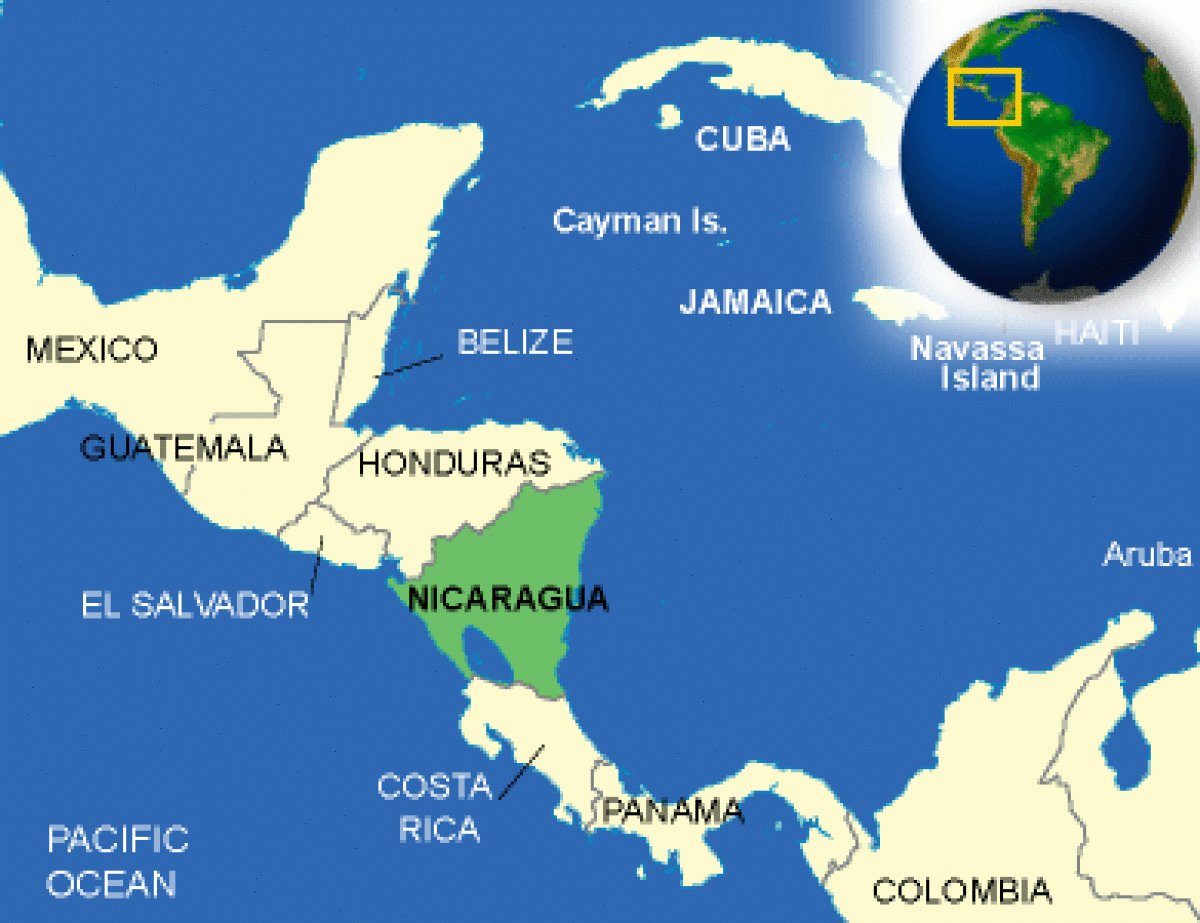
The lexified creole language I chose was Nicaraguan Creole English. The reason I picked that language variant was because I was interested in seeing what lexified creole languages existed in Spanish speaking countries. I found Nicaraguan Creole English and was instantly interested since the national language for Nicaragua is Spanish. It is mostly spoken in Bluefields, and other rural areas in Nicaragua. It’s especially spoken on the East of Nicaragua since the West is heavily dominated by Spanish speakers, and people who also speak English.
The Spoken form can be seen on various youtube videos. However, finding examples of the written language is a lot harder since it is not really a written language but instead one that is regularly spoken. The resources for my language were hard to find. I didn’t see much on academic databases and other websites. A majority of the information that was out there, was done by one person.
Below are some of the sources I used and how they were helpful to me.
Links:
http://www-01.sil.org/silesr/2001/004/SILESR2001-004.pdf
|
www-01.sil.org
1 A Report on the English-Lexifier Creole of Nicaragua, also known as Miskito Coast Creole, with special reference to Bluefields and the Corn Islands
|
-This PDF was written by two people who were well informed about the language. They wrote about the history of it, along with a general overview on it.
http://www.oxfordreference.com/view/10.1093/acref/9780192800619.001.0001/acref-9780192800619-e-787
|
www.oxfordreference.com
The language of the Creoles of the Miskito Coast (the Caribbean coast of Nicaragua and Honduras, named after Carib Indians
|
– This was the definition for my language.
https://www.youtube.com/watch?v=VzNWiSqs3B8
– Bluefields News Organization that reported in the language
|
|
www.youtube.com
Bluefields Creole News
|
|
|
www.youtube.com
Entrevista exclusiva a la Puopo(En el Idioma autoctono Creole ), Hija de la Graciela Garth (Puná), Legendaria Bailarina del Palo de Mayo, de Beholden, de la ciudad …
|
-Another video where you can hear the language
https://www.youtube.com/watch?v=IwuzPT-cNQo
– A documentary on creole identity in Nicaragua
|
|
www.youtube.com
This short documentary aims to capture the factors influencing Nicaraguan Creoles to identify themselves as Black and as members of the Black diaspora.
|
|
Defining Terms: Blog Post #2

- Adstrate:
1) A language which has influenced the elements or features of another (typically neighbouring) language.
Source: http://www.oed.com.york.ezproxy.cuny.edu/view/Entry/303790?redirectedFrom=adstrate#eid
2) Adstrate influence entails prolonged coexistence of linguistic systems in a geographical space whose contact leads to extensive borrowing, which causes language pairs or groups to become similar over time.
Source: Corum, Micah. Substrate and Adstrate : The Origins of Spatial Semantics in West African Pidgincreoles, De Gruyter, 2015. ProQuest Ebook Central, https://ebookcentral.proquest.com/lib/yorkcol-ebooks/detail.action?docID=1377151.
2. Lexifier
1) The base language of a pidgin or creole.
Source: Matthews, P. H. “lexifier.” The Concise Oxford Dictionary of Linguistics. : Oxford University Press, 2014. Oxford Reference. 2014. Date Accessed 6 Feb. 2018 <http://www.oxfordreference.com.york.ezproxy.cuny.edu/view/10.1093/acref/9780199675128.001.0001/acref-9780199675128-e-1884>.
2) (of a pidgin or creole) = base language.
Source:Matthews, P. H. “lexifier.” The Concise Oxford Dictionary of Linguistics. : Oxford University Press, 2007. Oxford Reference. 2007. Date Accessed 6 Feb. 2018 <http://www.oxfordreference.com.york.ezproxy.cuny.edu/view/10.1093/acref/9780199202720.001.0001/acref-9780199202720-e-1884>.
3.Substrate
1) A linguistic foundation; a language which (historically) forms the basis of another; (now esp.) a language already spoken in a particular region which affects another superimposed by a dominant (typically a conquering) group and contributes to the formation of a Creole.
Source: http://www.oed.com.york.ezproxy.cuny.edu/view/Entry/193100?rskey=kmQfOU&result=1#eid
2) “Substrate influence in the context of creole formation is defined here as a process whereby the creators of a creole fully or partially functionally reinterpreted constructions they encountered from (L1, L2, pidgin, etc.) varieties of the European superstrate language(s) in the setting and the elements that make them up according to the principles and patterns of their first language(s) (Migge 2003a).”
Source: Migge, Bettina M. “Assessing the Nature and Role of Substrate Influence in the Formation and Development of the Creoles of Suriname.” 2011, pp. Creoles, their substrates, and language typology.
***
A problem I had with defining “lexifier” is that it’s confusing to me that it is a “base language.” It seems to me like the other languages should be the base languages and the english language is the extra added language. It’s like English takes away the power in the other languages, and becomes the superior language. It’s confusing to me because why does the lexifier become the link between all the languages if it isn’t really the base language? Is it just because people can understand the lexifier when they can’t communicate effectively with their other languages? That’s what confuses me about Lexifiers.
American English, Spanish, Slang.
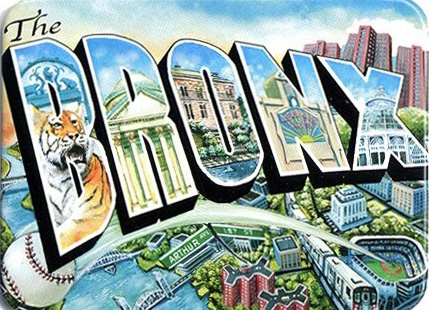
My name is Marc Torres. My major is English and my minor is Journalism. My passion is creative writing, and my second passion is reporting news. I write for Pandora’s Box, the school newspaper. I grew up in the Bronx and I still live there. Right now, I’m not too sure on what my plans are after graduating, but I hope to get a nice day job as a reporter. That’s what I’m working on right now at least.
I speak American English, and Spanish that sounds close to a Mexican dialect even though I am Half Puerto Rican. I grew up speaking English and Spanish at home. However, another language I learned to speak in school was Slang. I consider Slang a language because it is. I speak it when I’m around people I’m comfortable with. It’s very informal but it’s complex too. Just one phrase or word could have ten meanings. It’s common to speak slang where I grew up, and somehow you pick it and you understand it like you were born speaking it.

